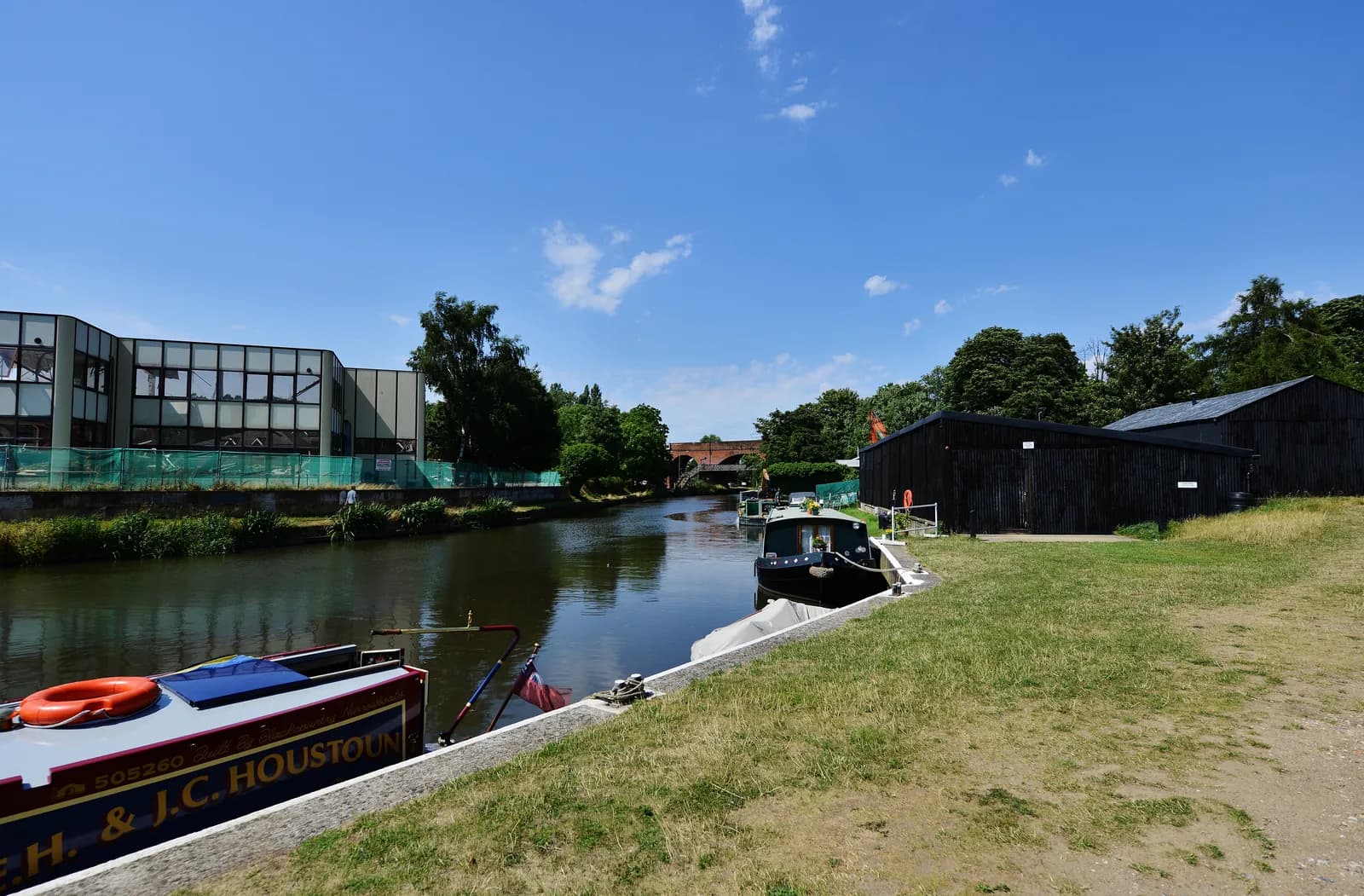
The River Wey Navigation opened in 1653 after Parliament authorised its construction in June 1651, connecting Guildford to the Thames and London for the first time. This 19.5-mile waterway transformed Guildford from a modest market town into a bustling commercial centre that handled timber, gunpowder, grain, and paper for over three centuries.
A Vision Born in Exile
Sir Richard Weston, knighted at Guildford on 27 July 1622, conceived the navigation after observing Dutch water management techniques during his exile in the Low Countries. He contributed £3,000 of his own money plus timber worth £2,000 to the project and employed 200 men to begin construction in August 1651. Sir Richard died on 17 May 1652 before completion, but his son George continued the work alongside Richard Scotcher, who managed accounts and workforce, and James Pitson, a Major in Cromwell's army who had helped secure Weston's discharge from sequestration and presented the enabling bill to Parliament.
The navigation opened in November 1653 with immediate financial success. First-year tolls produced £800, a figure that quickly grew to £15,000 per annum at its commercial peak.
Guildford's Industrial Boom
The navigation created direct economic benefits for Guildford through bulk transport capabilities. Barges could carry up to 80 tonnes from the Thames to Coxes Mill near Addlestone and 50 tonnes to Guildford itself, though capacity reduced further upstream to Godalming. This enabled several industries to flourish locally.
The Chilworth gunpowder works became a major customer, though Guildford authorities refused to allow powder through the town centre for loading at the main wharf, necessitating transport via Dapdune Wharf instead. Surrey timber from local forests formed a principal cargo heading to London, while wood pulp travelled from London docks to the Woking paper mill. Wheat and barley moved from the Royal Victoria Dock to Coxes Mill, one of the largest milling operations in the region.
Over 40 mills operated on the river and its tributaries between the 17th and 19th centuries, grinding grain, fulling wool, rolling oats, crushing cattle cake, dressing leather, producing paper, and manufacturing gunpowder. The Stevens family dominated river operations and barge building for more than 150 years, from William Stevens (1777–1856) through to Harry W. Stevens (1887–1970). The Edwards family, brought from the Kennet and Avon Canal in 1894, established themselves as specialist barge builders.
Strategic Connections
The navigation joins the River Thames at Weybridge via Thames Lock. Its importance grew further with the completion of the Wey and Arun Junction Canal in September 1816, which connected at Gunsmouth near Shalford, south of Guildford. This 23-mile waterway, built at a cost of £103,000 after receiving royal assent on 1 April 1813, created an inland route from London to Portsmouth that avoided vulnerable coastal waters during the Napoleonic Wars. The Basingstoke Canal also connected to the Wey Navigation at West Byfleet.
Dapdune Wharf: Guildford's Commercial Heart
Dapdune Wharf on Wharf Road became the navigation's principal wharf and boat-building yard. The site comprises a dozen buildings including a smithy, barge repair shed, carpenters shed, graving dock, steam chest, and tar chest. Two of only three surviving Wey barges, 'Reliance' and 'Perseverance IV', are housed here. A Grade II listed cottage was renovated in 1894 for the Edwards family, while Dapdune Lea, built for Mary Jane Stevens, now serves as National Trust administrative offices.
Other Guildford locations along the navigation include Guildford Wharf near Town Bridge, Stoke Lock with its lock-keeper's cottage, Millmead Lock in the town centre, and St Catherine's Lock further downstream.
From Commerce to Conservation
The National Trust acquired the Wey Navigation in 1964 and the Godalming Navigation extension in 1968. Commercial traffic continued as late as 1983, after which the waterway transitioned entirely to leisure use. The 20-mile navigable route from the Thames to Godalming remains open to boaters, with licences required for all craft including canoes and kayaks.
Dapdune Wharf now operates as an award-winning visitor centre offering interactive displays and boat trips aboard the electric 'Dapdune Belle'. The towpath is open to pedestrians throughout the year. The Wey Navigation Research Group, comprising National Trust volunteers, continues to research and publish historical information about the waterway.
The original 12 locks on the Wey Navigation featured turf-sided construction with timber framework. The system drops 72 feet between Guildford and Weybridge and can accommodate boats up to 73 feet 6 inches in length and 13 feet 10.5 inches in beam. Four additional locks were added with the Godalming Navigation extension in 1764.